AI Business › Resources › 2026-10-28
Most owners treat a quiet lead as a dead one and move on. That's a mistake. The sales professionals who've spent years closing deals will tell you the same thing: the lead didn't vanish, they just got quiet — and every silence has a reason with a move attached. Learn the seven, and you stop losing deals to noise.
The signal: "Let me think about it" followed by silence, no objection, no ghosting tone.
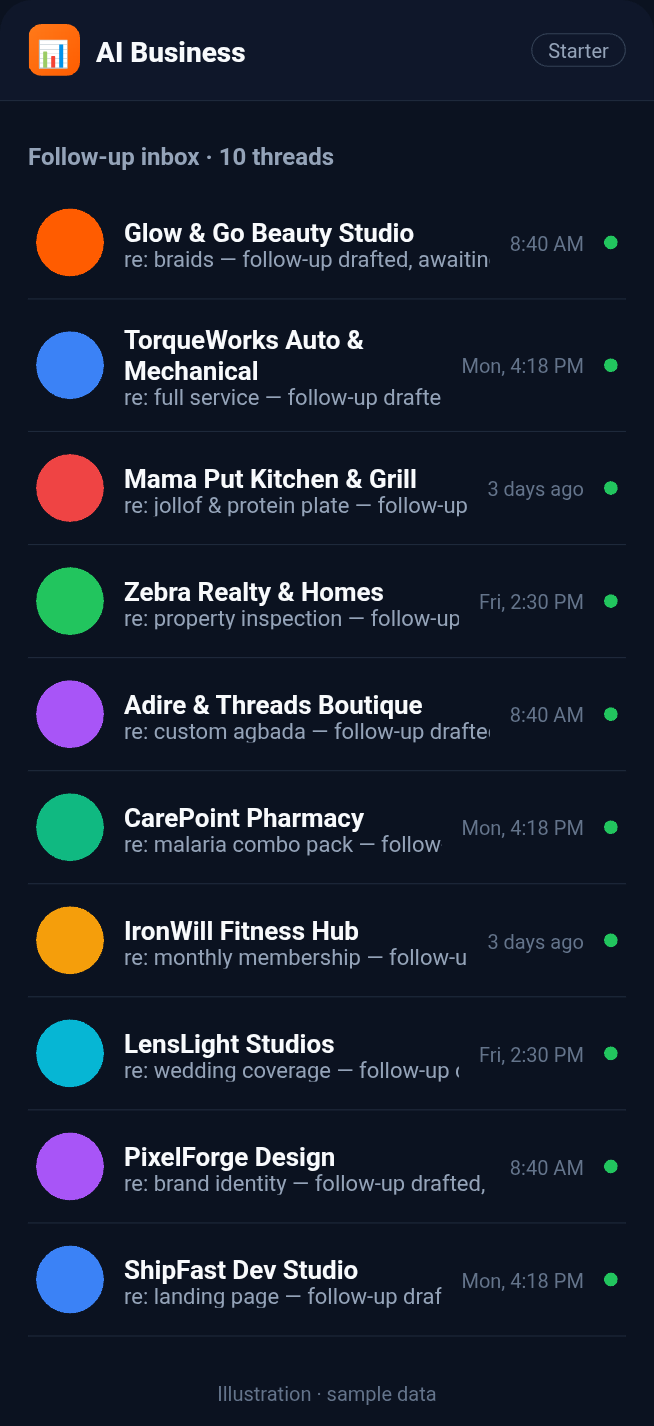
The move: Draft the follow-up now, while the yes is still warm. Send it in 48 hours with a real next step, not "just checking in." The lead isn't dead — it's sleeping. Be standing there when it wakes.
The signal: They saw your number and stopped replying, but didn't push back.
The move: Send a proposal that makes the value visible before the price lands. When the offer is clear, the number stops feeling like a surprise. A priced Business Page does the same job passively.
The signal: They replied to someone else first.
The move: Reply within the hour on every fresh enquiry. Warmth decays fast. Whoever answers first wins the "return later" lead. Speed is the cheapest sales weapon you have.
The signal: Sudden silence after engagement — often after seeing a sample, a portfolio, or a profile.
The move: Ask the direct question: "If there's anything that put you off, I'd genuinely rather know than wonder." Most won't answer, but the ones who do will tell you exactly what to fix.
The signal: They re-message you weeks later asking what you do, as if from scratch.
The move: Make your Business Page the one link you send when anyone asks what you do. Name, place, open-now badge, real prices, one WhatsApp button. A stranger who finds it trusts faster than one who has to guess.
The signal: "Yes, let's do it" followed by no deposit, no schedule, no confirmation — then silence.
The move: Lock the yes in writing the same hour. A signed, dated, verifiable Agreement gives the commitment something to fall toward instead of evaporating. The deal isn't real until it's recorded.
The signal: Slow replies, short messages, "let's see" language — but they haven't said no.
The move: Keep a clean follow-up cadence: day 2, day 5, day 10, day 20. Consistency proves you're not a flyer. The owner who follows up four times without being pushy is the owner who eventually gets the yes.
Notice what's missing from this list: none of the reasons is "they hated your product." That almost never happens. The silent killer is the small thing nobody named — the busy afternoon, the forgotten yes, the price they didn't push back on. Your job isn't to be better at selling. It's to be standing there with the right move, for the right reason, at the right moment.
← All guides · Decode the inbox · Why the yes vanishes · Lock it while it's hot